
The Story of the Lost Boys and Girls of Sudan
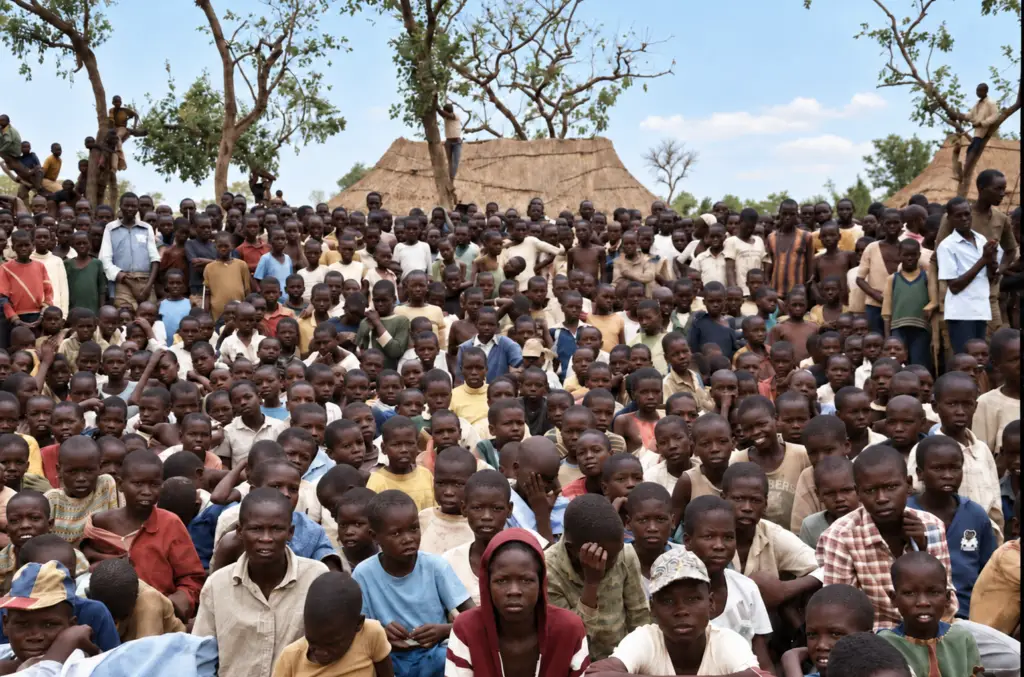
In 1983, the Sudan People’s Liberation Movement/Army (SPLM/A) began a protracted war against the Government of Sudan. During the conflict, government forces and allied militias used military attacks, forced displacement, abduction, looting and the destruction of livelihoods against communities across Southern Sudan. Hunger was also used as a weapon of war.
Among the armed groups involved were militias commonly known as the Murahaliin. The term is associated with Arabic words relating to travel or seasonal movement and was used to describe mounted militias, many of whom came from nomadic communities. These militias attacked villages, killed civilians, committed sexual violence, abducted children and adults, seized livestock and drove families from their ancestral lands.
Millions of cattle, sheep and goats were looted and taken north. Boys, girls and women were also abducted. Many captives were subjected to slavery, forced domestic labour, sexual exploitation or forced marriage. These attacks and the widespread displacement of communities led many young men and women from across Southern Sudan to join the SPLM/A.
Four years into the war, the SPLM/A leadership reviewed its overall strategy and concluded that the conflict was likely to continue for many years before its vision of a “New Sudan” could be achieved. There were also growing concerns that the destruction and disruption of education in Southern Sudan would create a generation of children without access to formal schooling and contribute to extremely high levels of illiteracy.
Between 1983 and 1987, many children who would ordinarily have been attending school or caring for their families’ livestock were left without safety, stability or education. The marauding Murahaliin and other armed forces terrorised communities across Southern Sudan. Family livelihoods were destroyed, relatives were separated and countless lives were lost.
Amid this violence and disorder, thousands of children fled their homes and began travelling towards Ethiopia. Many of them left suddenly, without their parents or other adult relatives. They would later become known internationally as the Lost Boys and Girls of Sudan.
The journey to Ethiopia took between 20 days and three months, almost entirely on foot. The children faced severe food and water shortages, hostile encounters, wild animals, extreme weather and rough, treacherous terrain. Many died from dehydration, heatstroke, illness, snakebites and attacks by wild animals. Others were killed during armed attacks or became separated from their groups.
Approximately 26,000 children eventually reached refugee camps in Ethiopia. Within their communities, the children were sometimes collectively described as “seeds,” reflecting the hope that they represented the future of their people. The camps initially consisted of makeshift shelters but were later developed, with assistance from the United Nations High Commissioner for Refugees (UNHCR) and other humanitarian organisations, into more established settlements.
When conflict intensified in Ethiopia in 1990 and 1991, the children were displaced once again. They fled the refugee camps and trekked back towards the Sudanese border. During this dangerous journey, they crossed rivers, endured hunger and disease, and remained vulnerable to attacks by armed forces.
Many eventually travelled through Sudan and into Kenya, where they found refuge at Kakuma Refugee Camp. Once again, not everyone survived the journey.
The name “Lost Boys” became widely used during the 1990s. It drew a comparison with the Lost Boys in J. M. Barrie’s story Peter Pan—children who were separated from their families and living without parental care. The term was initially used mainly for boys because they made up most of the children documented in the refugee camps. However, many girls experienced the same violence, separation and displacement. Their experiences are now increasingly recognised through the more inclusive name “Lost Boys and Girls of Sudan.”
A common element of their story is that they became separated from their parents during attacks by the Murahaliin, the Sudan Armed Forces and other armed groups in the villages of Southern Sudan. Some children later discovered that their parents had been killed, while others never learned what had happened to their families.
Many Lost Boys and Girls of Sudan have since been resettled in Australia, which they now proudly call their second home. Others have settled in Canada, the United States, the United Kingdom and other countries throughout Europe and around the world.
SALBAGOSS Inc. was established to preserve and advance the legacy of the Lost Boys and Girls of Sudan and to support their communities in Australia and overseas. Through education, community development, advocacy and humanitarian initiatives, we seek to honour their experiences while creating opportunities for future generations.
If this story has moved you and you would like to help, please contact us. We welcome and deeply value every form of support.